




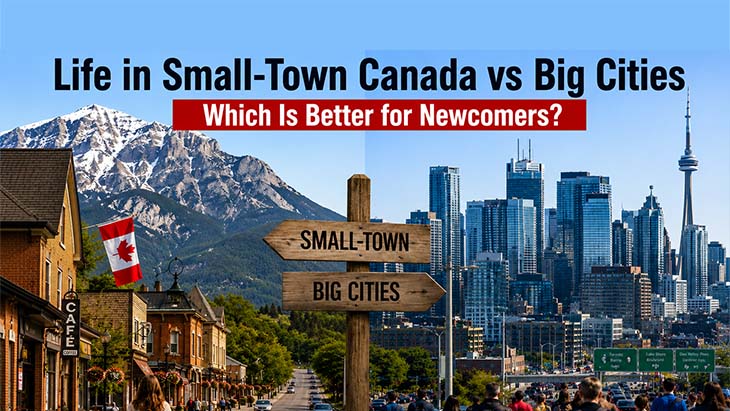

Canada is one of the most immigrant-friendly countries in the world, attracting newcomers with its strong economy, excellent healthcare system, quality education, and multicultural society. However, one of the biggest decisions immigrants faces after receiving their visa or permanent residency is choosing where to settle.
Should you move to a major city like Toronto, Vancouver, or Calgary? Or would a smaller Canadian town offer a better quality of life and more opportunities?
Both options have their own advantages and challenges. Understanding the differences can help immigrants make informed decisions based on career goals, lifestyle preferences, family needs, and long-term settlement plans.
Understanding Small-Town Canada
Small-town Canada refers to rural communities and smaller cities with lower populations compared to major metropolitan areas. Examples include towns in provinces like Saskatchewan, Manitoba, Nova Scotia, New Brunswick, and smaller communities in Alberta or Ontario.
These towns are often peaceful, community-oriented, and surrounded by natural beauty.
Advantages of Living in Small-Town Canada
1. Lower Cost of Living
One of the biggest benefits of living in smaller towns is affordability.
Housing prices and rental costs are significantly lower compared to major cities. New immigrants can often rent larger apartments or even buy homes much sooner than they could in cities like Toronto or Vancouver.
Other expenses such as transportation, parking, childcare, and groceries may also be more affordable.
Example:
- One-bedroom apartment in Toronto: High rental costs
- One-bedroom apartment in a smaller Saskatchewan town: Much more affordable
This lower financial pressure helps immigrants save money faster and build a stable future.
2. Better Work-Life Balance
Small towns generally offer a slower and less stressful lifestyle.
People spend less time commuting and more time with family. Traffic congestion is minimal, and daily routines tend to be calmer compared to large urban centers.
For immigrants seeking peaceful surroundings and mental well-being, small-town life can be highly attractive.
3. Strong Community Support
Smaller communities often provide close-knit social environments.
New immigrants may find it easier to connect with neighbors, local organizations, and community groups. Many towns actively support newcomers through settlement programs and local events.
In many rural communities, employers and residents genuinely welcome immigrants due to labor shortages and population growth needs.
4. Better Immigration Opportunities
Canada has introduced several immigration pathways encouraging newcomers to settle outside major cities.
Programs such as:
- Rural and Northern Immigration Pilot (RNIP)
- Provincial Nominee Programs (PNPs)
- Atlantic Immigration Program (AIP)
often prioritize smaller communities and rural regions.
These programs may offer:
- Faster PR pathways
- Lower competition
- Easier job opportunities
- Community support for settlement
5. Safer Environment
Many small Canadian towns have lower crime rates compared to big cities.
Families with children often prefer these locations because of:
- Safer neighborhoods
- Better community interaction
- Less crowded schools
- Peaceful surroundings
Challenges of Small-Town Canada
While there are many advantages, immigrants should also consider potential challenges.
1. Limited Job Opportunities
Certain industries may have fewer openings in smaller towns.
Fields like:
- IT
- Digital marketing
- Finance
- Media
- Entertainment
are more concentrated in major cities.
Immigrants working in specialized professions may need to research job availability carefully before moving.
2. Smaller Immigrant Communities
Large cities are known for multicultural diversity, whereas small towns may have fewer immigrant populations.
This can sometimes lead to:
- Cultural adjustment difficulties
- Limited ethnic food options
- Fewer cultural events
- Feelings of isolation initially
However, many newcomers eventually appreciate the quieter lifestyle and supportive communities.
3. Limited Public Transportation
Most small towns rely heavily on personal vehicles.
Unlike big cities with extensive public transit systems, rural communities may require immigrants to:
- Purchase a car
- Obtain a driver’s license quickly
- Learn winter driving skills
Transportation can become a challenge for newcomers who are not yet comfortable driving.
Life in Canada’s Big Cities
Canada’s major cities include:
- Toronto
- Vancouver
- Calgary
- Montreal
- Ottawa
- Edmonton
These urban centers attract millions of immigrants because of economic opportunities, multicultural communities, and modern infrastructure.
Advantages of Living in Big Cities
1. More Career Opportunities
Large cities are economic hubs with jobs across various industries.
Immigrants can find opportunities in:
- Technology
- Healthcare
- Banking
- Engineering
- Hospitality
- Education
- International business
Many multinational companies are headquartered in major cities, making them ideal for career growth.
2. Diverse and Multicultural Environment
Big cities in Canada are highly multicultural.
New immigrants often feel more comfortable because they can easily find:
- Cultural communities
- Religious centers
- International grocery stores
- Language support services
- Ethnic restaurants
This diversity helps newcomers adapt more smoothly.
3. Better Public Transportation
Major cities provide extensive transportation networks including:
- Buses
- Subways
- Trains
- Ride-sharing services
Many residents can live comfortably without owning a car.
4. Better Access to Services
Urban areas offer easier access to:
- Universities and colleges
- Specialized healthcare
- Entertainment
- Shopping centers
- Networking events
- Professional training
Immigrants seeking educational or career advancement often prefer larger cities for this reason.
Challenges of Big City Life
1. High Cost of Living
Housing costs in cities like Toronto and Vancouver are among the highest in Canada.
Expenses such as:
- Rent
- Transportation
- Parking
- Dining
- Childcare
can become overwhelming for new immigrants.
Many newcomers initially struggle financially despite earning decent salaries.
2. Traffic and Long Commutes
Big-city life often involves:
- Heavy traffic
- Crowded public transport
- Long commuting hours
- Fast-paced routines
This can impact work-life balance and increase stress levels.
3. Increased Competition
Since major cities attract immigrants from around the world, job competition can be intense.
Employers may expect:
- Canadian work experience
- Advanced certifications
- Strong networking skills
Newcomers sometimes take longer to secure their ideal jobs.
Which Option Is Better for Immigrants?
There is no single answer because every immigrant’s goals are different.
Small-Town Canada May Be Better If You:
- Prefer affordable living
- Want a quieter lifestyle
- Are moving with family
- Seek easier immigration pathways
- Work in healthcare, trades, agriculture, logistics, or manufacturing
Big Cities May Be Better If You:
- Work in IT, finance, media, or corporate sectors
- Prefer multicultural environments
- Need strong public transportation
- Want more networking and career opportunities
- Enjoy fast-paced urban lifestyles
Important Tips Before Choosing Where to Settle
Research the Local Job Market
Before moving, study:
- Employment demand
- Salary expectations
- Licensing requirements
- Local industries
Consider Weather Conditions
Smaller towns in certain provinces may experience harsher winters than larger coastal cities.
Understanding climate conditions is important for long-term comfort.
Evaluate Settlement Services
Check whether the region offers:
- Newcomer support
- Language training
- Career assistance
- Community integration programs
Think Long-Term
Ask yourself:
- Where can I grow professionally?
- Where will my family feel comfortable?
- What lifestyle do I want after five years?
Your settlement choice should align with your long-term goals.
Final Thoughts
Canada offers excellent opportunities in both small towns and major cities. While big cities provide diverse career options and multicultural experiences, small-town Canada offers affordability, peaceful living, and faster integration opportunities.
Many immigrants today are discovering that smaller communities can provide a better quality of life, reduced financial stress, and welcoming environments for families.
The best choice ultimately depends on your career, financial goals, lifestyle preferences, and personal priorities.
Before making your decision, take time to research provinces, job markets, and immigration pathways carefully. Choosing the right location can make your Canadian journey smoother, more successful, and more fulfilling.





Post Comments