




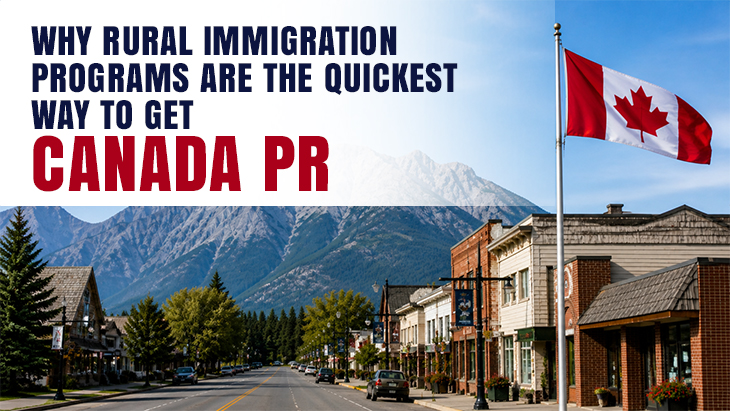

How Canada’s Rural Immigration Programs Are Becoming the Fastest PR Path
Canada has long been a top destination for immigrants seeking better career opportunities and quality of life. While major cities like Toronto, Vancouver, and Montreal attract the majority of newcomers, a new trend is reshaping the immigration landscape—rural immigration programs.
These programs are quickly becoming one of the fastest and most accessible pathways to Permanent Residency (PR), offering applicants lower competition, quicker processing, and strong community support.
What Are Rural Immigration Programs?
Rural immigration programs are initiatives designed by the Canadian government to attract skilled workers to smaller communities facing labor shortages and population decline.
One of the most prominent programs is the Immigration, Refugees and Citizenship Canada-backed Rural and Northern Immigration Pilot (RNIP), along with newer regional pathways launched to support economic growth outside major urban centers.
These programs allow designated communities to directly recommend candidates for PR based on local labor needs.
Why Rural Programs Are Becoming the Fastest PR Path
1. Lower Competition Compared to Urban Programs
Unlike Express Entry, which is highly competitive and CRS score-driven, rural programs have:
- Lower eligibility thresholds
- Community-based selection
- Higher chances of selection for qualified applicants
This significantly improves your chances of receiving an invitation.
2. Faster Processing Timelines
Applications through rural programs often move faster because:
- Fewer applicants apply compared to Express Entry
- Community-driven recommendations speed up approvals
- Priority is given to candidates filling urgent labor gaps
This makes it one of the quickest PR routes currently available.
3. Job Offers Are Easier to Secure
Rural employers actively seek international talent due to workforce shortages. This means:
- Higher demand across sectors like healthcare, IT, manufacturing, and trades
- Better chances of securing a job offer (a key requirement)
- Employers are more open to hiring foreign workers
4. Lower CRS Score Requirements
Unlike Express Entry, where high CRS scores (often 470+) are needed, rural programs:
- Do not rely heavily on CRS
- Focus on skills, experience, and community fit
- Accept candidates with moderate language scores
5. Strong Community Support
One unique advantage is community involvement:
- Local organizations help newcomers settle
- Easier integration into smaller communities
- Personalized support for housing, jobs, and lifestyle
This improves both approval chances and long-term success.
Popular Rural Immigration Pathways
1. Rural and Northern Immigration Pilot (RNIP)
- Community-driven PR pathway
- Requires a job offer from a designated community
- Faster PR processing after recommendation
2. Provincial Rural Streams
Many provinces have their own rural-focused streams under Provincial Nominee Programs (PNPs), such as:
- Ontario Rural Streams
- Alberta Rural Renewal Stream
- Saskatchewan Hard-to-Fill Skills Pilot
These programs are tailored to local workforce demands.
Eligibility Criteria (General Overview)
While requirements vary by program, most rural immigration pathways require:
- A valid job offer from a designated rural employer
- Relevant work experience
- Language proficiency (CLB 4–6 typically)
- Educational qualifications
- Proof of settlement funds
- Intent to live in the community
Who Should Apply?
Rural immigration programs are ideal for:
- Skilled workers with moderate CRS scores
- Candidates struggling with Express Entry cut-offs
- Applicants open to living outside major cities
- Individuals seeking faster PR processing
Challenges to Consider
While these programs offer many advantages, there are a few realities:
- Limited job opportunities compared to big cities
- Smaller communities and quieter lifestyle
- Need for long-term commitment to the region
However, for many applicants, the trade-off is worth the faster PR approval.
Future of Rural Immigration in Canada
Canada continues to expand rural immigration initiatives due to:
- Aging population
- Labor shortages in smaller towns
- Need for balanced regional development
Experts predict that rural pathways will become even more streamlined and prominent in the coming years, making them a top choice for PR applicants.
Final Thoughts
Canada’s rural immigration programs are no longer just an alternative—they are quickly becoming the fastest and most practical pathway to Permanent Residency.
With lower competition, faster processing, and strong employer demand, these programs offer a golden opportunity for skilled workers worldwide.
If your goal is to secure Canada PR quickly, looking beyond major cities and exploring rural pathways could be your smartest move.






Post Comments